
How to cook vegetables from frozen without making them soggy
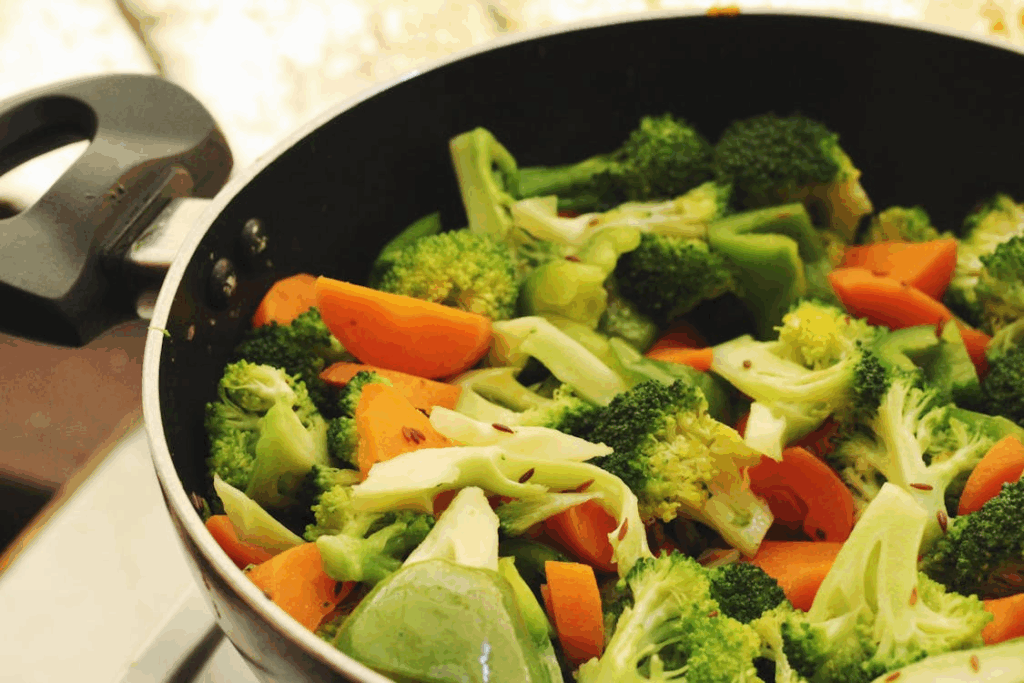
Frozen vegetables have a reputation problem. The reputation is mostly undeserved, and it comes almost entirely from one mistake that gets made over and over: adding frozen vegetables to a pan with too much moisture, over too little heat, and then covering them while they cook. The result is grey, waterlogged, textureless vegetables that taste like the bag they came in, and the conclusion most people draw is that frozen vegetables are inherently inferior to fresh.
They’re not. In many cases — and this is the part that surprises people — frozen vegetables are nutritionally superior to fresh ones that have been sitting in transit and on a shelf for several days, because they’re blanched and frozen at peak ripeness, which locks in nutrients that fresh vegetables lose gradually during storage. The flavor difference between frozen and fresh is real but smaller than most people think. The texture difference is almost entirely a cooking problem, not a vegetable problem.
Fix the cooking and frozen vegetables become a genuine convenience rather than a compromise.
Why frozen vegetables go soggy
Understanding the problem makes the solution obvious.
When vegetables are frozen commercially, they go through a blanching process first — a brief dip in boiling water that deactivates the enzymes responsible for deterioration and sets the color. Then they’re frozen rapidly, which causes the water inside the vegetable cells to form ice crystals. Those ice crystals are small and relatively harmless when the freezing is done quickly at very low temperatures, which is why commercially frozen vegetables freeze better than vegetables you freeze at home in a regular freezer.
When the vegetables thaw — either before cooking or during cooking — those ice crystals melt and the cell walls that were holding them release water. This is unavoidable. Every frozen vegetable releases water as it thaws, and the amount of water released is significant. The difference between soggy and not soggy comes down entirely to what you do with that water.
If the water has nowhere to go — if the vegetables are in a covered pan, or crowded together so tightly that steam can’t escape, or cooking over low heat that doesn’t evaporate moisture quickly — it pools around the vegetables, which then sit in their own liquid and steam rather than roast, sauté, or char. Steamed vegetables are fine when you intend to steam them. Vegetables that steam accidentally when you were trying to sauté them are what gives frozen vegetables their bad name.
The solution is always the same: give the water somewhere to go, and give it heat to help it get there.
The method that works for almost everything: roasting from frozen
Roasting is the most forgiving and most consistently successful method for cooking frozen vegetables, and it works precisely because it addresses the water problem directly.
A hot oven — 425–450°F — produces enough ambient heat that the water released by thawing vegetables evaporates almost as fast as it’s released. The vegetables aren’t sitting in liquid because the liquid is turning to steam and dispersing into the oven atmosphere rather than pooling. Meanwhile the direct heat of the oven, combined with the hot surface of the baking tray, begins the browning process that turns frozen vegetables from something adequate into something genuinely good.
The rules for roasting frozen vegetables are few and specific.
Don’t thaw them first. This seems counterintuitive but it’s important. Thawed vegetables have already released a significant portion of their water before they go in the oven, which means they go in wet. Wet vegetables that go into a hot oven spend the first part of their cooking time steaming in their own moisture rather than roasting. Frozen vegetables go in dry — the water is locked up as ice — and the heat of the oven handles the thawing and the evaporation simultaneously, which means the surface starts to dry out and brown much sooner.
Use a hot oven. 425°F is the minimum. 450°F is better for most vegetables. The higher temperature is what gives you the evaporation rate you need.
Don’t crowd the tray. This is the single most common roasting mistake, frozen or fresh. When vegetables are packed tightly together, the steam they release has nowhere to go except upward through the pile. The vegetables on the bottom steam rather than roast. The solution is to spread them in a single layer with space between pieces — if you have more vegetables than fit on one tray with space around them, use two trays. A crowded tray of perfectly good frozen vegetables will produce a soggy result every time.
Use enough oil. Toss the frozen vegetables in oil before they go on the tray — a generous amount, enough to coat every surface. The oil conducts heat to the vegetable surface faster than air does, which accelerates both evaporation and browning. Vegetables that go into the oven under-oiled tend to dry out on the surface without browning properly, or steam in their own water without developing color.
Season after, not before. Salt draws moisture out of vegetables. Applied before roasting, it accelerates water release at the wrong time — adding to the pool of moisture you’re trying to manage. Salt after the vegetables come out of the oven, while they’re still hot enough for it to adhere.
Sautéing from frozen — and why it’s harder
Sautéing frozen vegetables is possible and quick, but it requires more attention than roasting because the margin for error is smaller. The same water problem exists — frozen vegetables release moisture as they thaw — but in a pan on the stovetop, you have less thermal mass and less airflow than in a hot oven, which means the water accumulates faster than it evaporates unless the conditions are exactly right.
The conditions that make it work: a wide pan, high heat, a small amount of vegetables relative to the pan size, and no lid.
Wide pan because surface area is what allows steam to escape. A deep saucepan traps steam; a wide skillet or wok lets it disperse. The wider the better — if you’re using a 12-inch pan for a small amount of vegetables, that’s fine. Using a 12-inch pan for a full bag of frozen broccoli is the problem.
High heat because the faster the water evaporates, the less time it spends in the pan making things soggy. Medium heat is not enough for frozen vegetables. The pan should be genuinely hot before the vegetables go in — hot enough that a drop of water evaporates almost immediately on contact.
Small amounts at a time because adding too many frozen vegetables to a pan drops the pan temperature significantly. A cold mass of frozen vegetables in a hot pan will cool the pan down faster than the burner can recover, which means the vegetables sit in a pool of cold water rather than sautéing in a hot pan. Cook in batches if you’re making a large quantity — less satisfying than doing it all at once, but the difference in result is significant.
No lid, ever, when the goal is to avoid sogginess. A lid traps steam and sends it back into the vegetables. Leave the pan uncovered throughout and let the moisture escape into the kitchen.
Which vegetables handle freezing well — and which don’t
Not all vegetables freeze equally, and understanding which ones hold up and which ones don’t saves a lot of frustration.
Peas are the gold standard of frozen vegetables. Their small size means the ice crystals that form during freezing don’t have far to travel through the cell structure, which means less cellular damage on thawing and better texture retention. Frozen peas are genuinely excellent — often better than fresh peas that have been sitting out, because the sugars in peas convert to starch quickly after picking and the freezing process halts that conversion at peak sweetness.
Corn, edamame, broad beans, and other legumes similarly hold up well. The cell structure is robust and the pieces are small enough that the freezing damage is minimal.
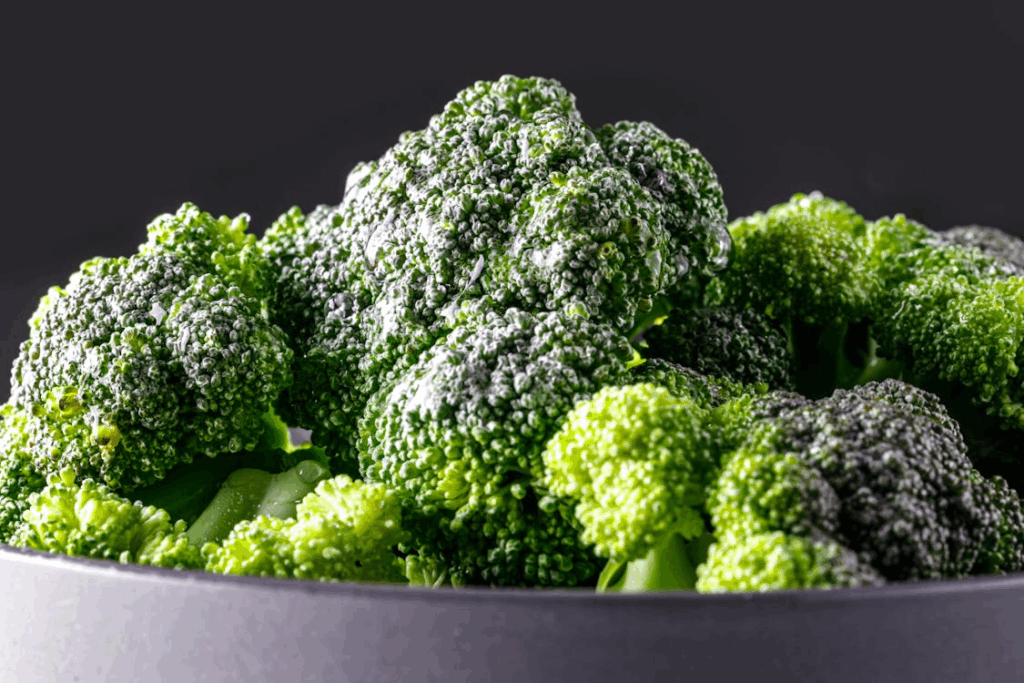
Broccoli and cauliflower do well from frozen when roasted. The dense florets hold their shape, the cut surfaces brown nicely, and the texture of properly roasted frozen broccoli is very close to fresh. Sautéed, they’re more variable — they can go mushy if the heat isn’t high enough or the pan is crowded.
Green beans from frozen are decent roasted or quickly sautéed at high heat, but they never quite achieve the snap of a fresh green bean. The cell walls soften during freezing in a way that can’t be reversed. They work well in dishes where texture is less critical — stir fries, casseroles, pasta — and less well as a standalone side where the texture is the point.
Spinach and leafy greens are the other extreme. Frozen spinach releases an enormous amount of water and collapses completely in texture — it’s essentially a different product from fresh spinach, best used in cooked applications where texture doesn’t matter: pasta sauces, soups, dips, stuffed dishes. Anyone who has tried to sauté frozen spinach as a fresh spinach substitute knows the result. It works in a different context, not the same one.
Peppers do reasonably well from frozen in cooked applications but go soft quickly and don’t have the slight crunch of fresh pepper. Fine in a stir fry or a sauce, not ideal as a primary vegetable in a dish where texture matters.
Asparagus is one to approach with caution. The delicate tips suffer during freezing, and the texture on thawing is often stringy and soft. Fresh asparagus roasted properly is a different experience from frozen — the gap here is larger than with most other vegetables. If fresh isn’t available, frozen asparagus is better in a blended soup than as a roasted side.
The blanching trick for sautéed vegetables
There’s a technique worth knowing for situations where you want the speed of frozen vegetables but the texture of fresh — particularly for stir fries and quick sautés where the final texture matters.
Bring a pot of salted water to a boil and drop the frozen vegetables in for sixty to ninety seconds — not long enough to cook them, just long enough to thaw them and get them hot all the way through. Drain them immediately, spread them on a kitchen towel or paper towels, and pat them as dry as you can. Then sauté in a hot pan immediately.
The blanching thaws the vegetables in a controlled way and heats them through, which means when they hit the pan they don’t drop the temperature dramatically. The thorough drying removes the surface moisture that would otherwise steam in the pan. The result is a vegetable that sautés rather than steams and gets color and char in a way that going straight from frozen usually doesn’t allow.
It adds a step and takes more time than going straight from frozen to pan. For dishes where the texture of the vegetable is important — a stir fry where you want blistered snap peas, a side dish where you want green beans with a little color on them — it’s worth it.
The practical summary
Soggy frozen vegetables are a cooking problem, not a vegetable problem. The water released during thawing needs somewhere to go, and it needs heat to help it get there. A hot oven with a single layer of unsauced vegetables on a well-oiled tray solves this almost automatically. A hot wide pan with a small amount of vegetables and no lid solves it on the stovetop. Crowding, low heat, and covered pans are the three conditions that produce the grey, waterlogged result that gives frozen vegetables their reputation.
Choose the right vegetable for the right method, cook from frozen rather than thawing first for roasted applications, and season at the end rather than the beginning. Those adjustments alone close most of the gap between frozen vegetables that disappoint and frozen vegetables that are genuinely worth eating.